

2015 – 01 – The Spcnet Discovery
by Eternalib# Chapter 1: The Spcnet Discovery—An Empire Built on Borrowed Land
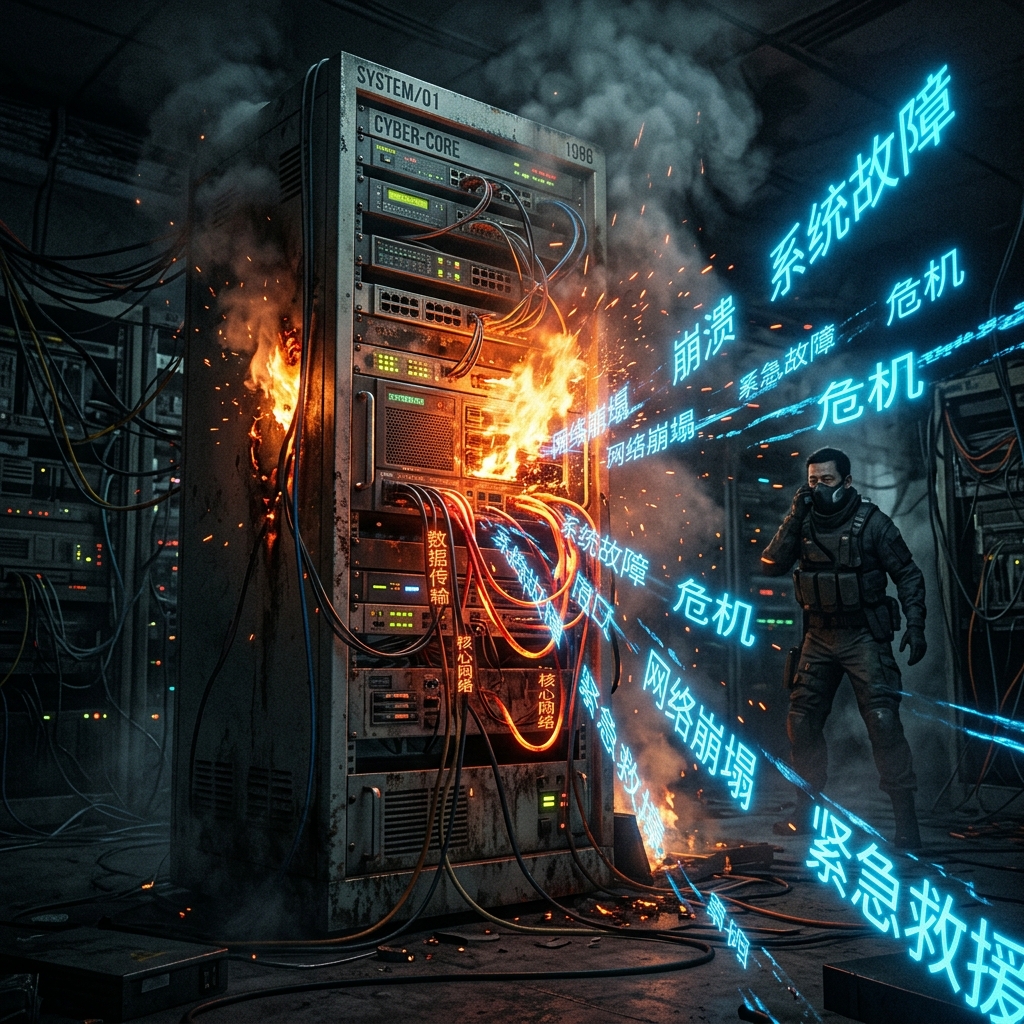
If you track the origins of the multi-billion dollar English web fiction industry, the trail does not lead to a venture capital boardroom in Shenzhen. It does not lead to an elite marketing team engineering a new literary demographic. It leads to something much messier, much more fragile, and ultimately much more human.
It leads to a single person, sitting at a computer after a ten-hour shift at his day job, copy-pasting translated Chinese text into a clunky television drama forum called spcnet.tv just because he wanted someone, anyone, to talk to about a story he loved.
To truly understand how Webnovel.com and Royal Road became the aggressively optimized, algorithm-driven content factories they are today, you have to look at the exact moment the audience first tasted the drug. You have to look at the accident that birthed the genre.
—
Part 1: The Japanese Light Novel Exhaustion
Before we talk about the Chinese explosion, we need to talk about the psychological condition of the Western “nerd” reader demographic in the years leading up to 2015. Spcnet didn’t magically create a demand for progression fantasy out of thin air. It found a demographic that was already starving, and it handed them a firehose.
At the time, the dominant hub for serialized, translated internet literature in the West was the Japanese Light Novel (LN) community. Fan-translation sites like Baka-Tsuki had spent years hosting amateur English translations of Japanese staples like Sword Art Online, No Game No Life, and A Certain Magical Index. This was the foundational ecosystem that originally trained Western readers to crave daily updates, stat-based ability systems, and massive, encyclopedic world-building.
But by late 2014, the Japanese market had fallen into a deep, predictable rut. The Isekai (transported to another world) genre had completely metastasized. Almost every popular title adhered to the exact same frustrating psychological template.
The protagonists were universally passive, socially anxious, and morally apologetic. They were terrified of holding hands with the women in their party. And most infuriatingly to a Western audience raised on comic book heroes, they refused to assert dominance over their enemies. They would be violently humiliated by a villain, magically gain the power to destroy that villain, and then spend fifty pages agonizing over whether it was morally correct to fight back.
The Western readership was chemically exhausted by this passivity. They didn’t want another reluctant teenager wrestling with the ethical weight of a magical sword. They wanted a protagonist who fully embraced his strength. They wanted pure, unapologetic, hyper-meritocratic progression.
“I swear if I read one more Japanese novel where the main character gets publicly mocked by the villain, has the power to instantly destroy him, and then monologues about forgiveness for eight pages, I am throwing my monitor out the window. I just want an MC who actually fights back. Is that so much to ask?”
— Archivedr/LightNovelsUser Post, November 2014 (840 Upvotes)
This frustration was a demographic-scale powder keg. The internet-native audience was primed—psychologically and narratively—to receive the exact opposite of what Japan was serving them. They just didn’t know where to find it.
—
Part 2: The Antidote on the Drama Forum
Spcnet.tv had absolutely nothing to do with web fiction. It was a niche, quiet English-language forum designed for fans of Chinese and Korean television dramas—historical romance serials and wuxia period pieces. Its core userbase was small, polite, and culturally passionate. It was the internet equivalent of a quiet neighborhood book club.
But buried deep in the sub-forums, a handful of bilingual members had been casually translating chapters of Chinese martial arts novels purely as a hobby.
The tectonic shift occurred when a user going by the handle RWX—his real name Ren Woxing, a man with native-level Mandarin fluency and a background in international diplomacy—began posting amateur translations of a massively popular Chinese “Xianxia” (Cultivation) epic called *Coiling Dragon, written by an author known as I Eat Tomatoes*.
Coiling Dragon was the exact antidote the Western market was begging for.
The protagonist, Linley Baruch, was brutally proactive. When an arrogant local noble insulted his clan, Linley didn’t pause to weigh the moral implications of extreme retaliation. He murdered the noble, extracted his magical artifacts, slaughtered the noble’s entire household to prevent any future revenge plots, and immediately left the continent to hunt down stronger adversaries.
Furthermore, the novel’s power system was rigid, mathematical, and deeply addictive, mimicking the exact progression trees of a role-playing game. And best of all? Because the novel was already largely completed in China, there were over seven hundred chapters ready to be translated.
When links to RWX’s Coiling Dragon translations inevitably leaked out of the quiet Spcnet bubble and onto major aggregate hubs like Reddit in early 2015, the demographic migration was violently instantaneous.
“Bro I found this thing called Coiling Dragon. I loaded it up at 11pm just to check it out. It is now 7am. I have not slept. I have read 94 chapters. The MC just ripped a duke’s head off in public and didn’t even give a speech about it. Japanese LNs are dead to me.”
— Leaked Discord Log from a Baka-Tsuki Translation Server, 2015
The manga and anime readers converted overnight. They were fundamentally accustomed to waiting an entire month for a twenty-page manga chapter. Coiling Dragon was providing over 3,000 words of explosive, dopamine-heavy fantasy action every single day. For the serialization audience, it was an unparalleled upgrade in pacing. Baka-Tsuki’s traffic plummeted as the demographic packed up their collective bags and flooded the Spcnet servers.
—
Part 3: The vBulletin Bottleneck (DDoS by Enthusiasm)
This is where the human passion of the translation boom collided violently with the cold architectural reality of early internet infrastructure.
Spcnet.tv was running on a legacy iteration of vBulletin software. If you were active on the internet in the late 1990s, you know exactly what vBulletin looks like: it was designed for slow, methodical text discussions. It possessed absolutely zero modern reading capabilities.
Let’s break down the sheer agony of the 2015 reading experience:
- No Table of Contents: To read Chapter 47, a new reader had to open a massive six-hundred-page mega-thread and manually scroll through hundreds of user replies simply to locate the specific post where RWX had pasted the translated text.
- No Bookmarking: If you closed your browser, you lost your place. Readers actively maintained Excel spreadsheets or sticky notes tracking which page of the forum they died on the night before.
- Zero Accessibility: There were no dark modes. Readers were staring at stark, blinding white backgrounds covered in tiny, non-responsive text on their early smartphones at 3:00 AM.
Despite this aggressively abrasive user experience, the addiction was so severe that readers simply powered through it. However, the true catastrophe wasn’t the user interface; it was happening in the physical server racks hosting the website.
Whenever RWX dropped a quick post on Reddit announcing that a new chapter of Coiling Dragon was live on Spcnet, an immediate horde of over fifteen thousand users would flock to the forum. Because they were desperate to read the chapter the absolute millisecond it posted, they would aggressively mash the refresh key on their keyboards.
From the perspective of Spcnet’s low-budget, amateur web server, fifteen thousand users rapidly refreshing a dense PHP database simultaneously is computationally indistinguishable from a malicious Distributed Denial-of-Service (DDoS) attack.
The server buckled under the sheer weight of the enthusiasm. It crashed repeatedly, often staying offline for hours at a time, displaying nothing but a barren 502 Bad Gateway error.
“Spcnet is down again. It’s been down for three hours. If I don’t find out what happens to Linley’s grandfather in the next twenty minutes I am genuinely going to have a breakdown. Someone please tell me they copy-pasted the text into a pastebin before the server imploded.”
— Archivedr/NovelTranslationsPanic Thread, 2015
The sheer volume of raw data transfer triggered massive, existential bandwidth overage fees for Spcnet’s administrators. The people running the forum were hobbyists who operated a quiet TV drama board; suddenly, they were receiving invoices from their hosting provider for thousands of dollars because of a translation project they had nothing to do with.
The math of the damage was staggering for a hobbyist budget:
- Standard vBulletin shared hosting plan: ~$30–50 per month.
- Bandwidth overage from 15,000 daily active readers: Thousands of dollars per billing cycle, billed retroactively.
- Forum admin’s options: Pay the surprise invoice from personal funds, or shut down the forum thread entirely.
The forum administrators didn’t sign up for this. They were fans of Princess Agents and Chinese historical dramas. They had opened their doors to a small, quiet translation thread out of cultural generosity, and that thread had detonated a financial hand grenade in their server room.
The Western translators realized with absolute horror that their viral success was effectively bankrupting the polite, obscure forum that had graciously given them a home.
—
Part 4: The Legal Naivety of the Fan-Fiction Exemption
The breakaway was no longer a matter of preference. It was a structural necessity. To survive their own traffic, the translators were going to have to build their own dedicated websites and purchase enterprise-tier cloud servers. And to pay for those servers, they were going to have to introduce real money into an ecosystem that, up until that point, had existed completely outside of corporate capitalism.
Before we look at how that monetization happened, we must sit with the specific legal reality of what was happening on spcnet.tv in 2015. Because this is the detail that makes the eventual corporate war feel less like a betrayal and more like an inevitably triggered trap.
RWX did not own Coiling Dragon.
He never did. The intellectual property belonged to the author (I Eat Tomatoes), who was contracted under Qidian—a titan of the Chinese publishing industry backed by the infinite capital of Tencent.
In 2015, this was considered a complete non-issue within the independent community. The western translators operated under the massive legal assumption of the “Fan-Fiction Exemption.” They genuinely believed that because they were translating these works entirely for free, on a hobbyist forum separated from the Chinese economy, they were immune to copyright action.
The math of what was happening, from Qidian’s theoretical perspective, looked like this:
- Independent college students were building a cohesive Western audience of hundreds of thousands of readers.
- That audience was deeply, emotionally invested in Chinese-owned IP.
- The community was about to begin monetizing that audience to pay for servers.
- Literally zero dollars of that newly generated revenue was flowing back to the IP holders in China.
The translators thought they were acting as benevolent cultural ambassadors, bringing amazing literature to an English demographic that would never have otherwise discovered it. They thought the Chinese authors would simply be flattered.
They did not know that by nurturing this massive, hopelessly addicted audience, they were constructing the exact multi-million-dollar foundation that Tencent’s legal teams would eventually seize, monetize, and inevitably weaponize against them. They were building an empire entirely on rented land, completely unaware that the corporate landlord across the Pacific Ocean was already beginning to watch the analytics.
—
Part 5: The Point of No Return — The Invoice and the Decision
The Spcnet crash was not just an embarrassing technical inconvenience. It was the event that permanently transformed the translation community from a casual hobby into something with the structural gravity of a business.
When the bandwidth invoices arrived at the desks of Spcnet’s moderators, the community faced a simple, brutal decision tree with exactly two options:
Option A: Stop. Pull the translation threads, inform the 15,000 daily readers that the project was dead, and return to the quiet life of a TV drama forum. This was the legally clean, financially sensible choice. The translators owned nothing. The readers were owed nothing. The whole operation could have evaporated without legal consequence.
Option B: Build. Accept the financial and legal reality of what was happening, move to a dedicated infrastructure, and charge real money to pay for it.
This was the moment that the translation community crossed the Rubicon. And it is almost impossible to overstate how significant that crossing was. Because the instant they chose Option B—the instant they built Wuxiaworld.com on its own dedicated server and began soliciting PayPal donations to cover costs—they permanently destroyed any remaining legal protection that the “Fan-Fiction Exemption” had provided.
A fan who translates a novel for free as a hobby is legally in a grey area. A person who builds a dedicated website, optimizes it for search engines, and charges readers money to fund the operation of distributing a foreign corporation’s intellectual property is operating a commercial enterprise. The law does not care about the passion in your heart. It cares about the money moving through your PayPal account.
RWX made the jump with full awareness of the risk. He purchased a dedicated server, pointed his domain, and announced the migration to the Spcnet community in a single forum post. The entire readership followed in under 72 hours, crashing the new Wuxiaworld servers almost immediately upon launch.
“RWX just posted the link to the new site. I refreshed it for ten minutes straight before I could get in. The forums are already going insane. Someone posted their PayPal receipt — they donated $50. The replies are saying ‘this is the best $50 I’ve ever spent.’ This community has genuinely lost its mind and I love it.”
— Archived Wuxiaworld Early Forum Thread, Mid-2015
The migration was not just a technical event. It was a declaration. The independent translation community had decided, collectively and enthusiastically, that this thing they were building was worth protecting. Worth paying for. Worth risking a lawsuit over.
That decision — made by a handful of passionate, legally naive college students on a televison drama forum — is the single event that created the modern web fiction industry. Everything that followed: the Sponsored Queues, the DMCA wars, the Qidian corporate invasion, the Royal Road empire, the LitRPG boom — it all traces back to the moment RWX registered a domain and pointed it at a cloud server.
The empire was open for business. The landlord just didn’t know yet.
—
Part 6: Actionable Takeaways for Surviving the Modern Factory
The Spcnet era is not ancient history. It is the direct origin story of the platform conditions you are navigating today as an author. If you are writing on Webnovel, Royal Road, or Amazon Kindle Vella in 2026, the DNA of your ecosystem was coded in the fires of 2015.
Here is what you must extract from the Spcnet Discovery to survive the modern algorithm:
1. The Power of Rejection (Antithesis Writing)
Coiling Dragon did not succeed in the West because it was a perfect literary masterpiece. It succeeded because it was the exact, aggressive antithesis of what the reader was currently tired of reading. If the dominant trend on your platform is sluggish, overly-political LitRPG, the audience is likely subconsciously starving for a hyper-fast, brainless progression fantasy. Look at what the platform is currently over-saturated with, and purposefully write the absolute inverse.
2. Velocity is Sovereign
The Western audience abandoned entirely functional, well-established Japanese translation hubs simply because the Chinese novels updated faster. In the serialized space, the speed of delivery will consistently override the polish of the prose. If you want to hijack an audience, you must establish a rapid, unbreakable release cadence.
3. Identify Your Core Dopamine Loop
The early readers willingly suffered through 502 Bad Gateway server crashes, blinding white backgrounds, and unreadable forum formatting just to figure out what happened in the story. They didn’t care about the UX, because the dopamine loop of the Cultivation power-system was so strong. If your story relies on fancy formatting or beautiful website presentation to keep the reader engaged, your actual narrative loop is too weak. The story must be addictive enough that a reader would be willing to read it printed on a napkin.
*(The machine was built. Now, the human cost had to be paid. In Chapter 02: The Volunteer Translator, we explore the severe psychological burnout and the terrifying parasocial leverage that defined the life of the internet’s early unpaid workers).*
0 Comments